Most fake autographs are not sophisticated. They are printed signatures sold as hand-signed, machine signatures, or quick imitations that fall apart once you look closely. These nine checks catch the majority of them, and none needs special equipment.
1. Make sure it is ink, not print
Tilt the item under a lamp. Real marker or pen ink sits on the surface and has a different sheen from the image underneath. Under a magnifying glass a printed signature breaks into tiny dots and has perfectly flat, even colour. Real ink shows darker spots where strokes cross and where the pen paused.
2. Look for speed
People sign their own name fast, without thinking. That produces smooth curves, tapered starts and finishes, and lines that get lighter as the pen lifts. A forger copying a shape works slowly, which leaves shaky curves, blunt stroke ends and small blobs where the pen stopped to check the next letter.
3. Check for pen lifts in the wrong places
A genuine signature usually flows through several letters in one stroke. If the line breaks in the middle of a letter or between letters that the signer normally joins, it was probably drawn in pieces.
4. Rule out autopen
Politicians, astronauts and some celebrities use an Autopen, a machine that signs with a real pen from a stored pattern. The result is real ink but not a real autograph. Signs to look for: completely even line weight, small dots at the start and end of strokes, and a signature that overlays another example exactly. No one signs identically twice.
5. Compare with the right era
Signatures change. Mickey Mantle in 1952 does not look like Mickey Mantle in 1990, and Muhammad Ali signed as Cassius Clay before 1964. Compare your item with authenticated examples from the same years, and be suspicious when the style and the claimed date disagree.
6. Date the pen and the item
Ballpoint pens reached American shops in late 1945. Felt-tip markers became common in the mid-1960s, and paint pens later still. A felt-tip signature from a player who died in 1948 is impossible. The same applies to the item itself: the photo print, the ball stamping or the jersey tagging has to exist at the time of signing.
7. Know about secretarial and clubhouse signatures
Not every non-genuine signature is a modern forgery. Staff signed fan mail for film stars, road managers signed for The Beatles, and clubhouse attendants signed team baseballs for star players. These are period items and often look convincing, but they are not the person's autograph.
8. Verify the certificate, not just its existence
A certificate of authenticity is only as good as whoever issued it. Anyone can print one. Certificates from PSA/DNA, JSA and Beckett carry a number you can look up on the company's own website, and the description there should match your item. A sticker that does not check out is worse than no sticker.
9. Question the price and the story
A Babe Ruth ball at a tenth of market price is not a bargain. Ask where and when the item was signed. Honest sellers usually have an answer, a photo, a receipt or a chain of previous owners.
Where an AI scan fits in
Autograph Identifier lets you photograph a signature and get an immediate first opinion: who it appears to be, a likely authentic or unclear assessment, the characteristics it noticed and any red flags. It is useful for sorting a box of unknown items or for a quick check before you bid. It does not replace professional authentication, and you should not buy or sell an expensive item on an app result alone.
Check an autograph with AI
Photograph a signature and get the identified name, an authenticity assessment and any red flags in seconds.


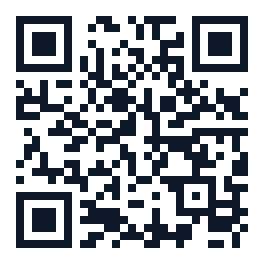 On a computer? Point your phone camera at the code to get the app.
Free to download · 1 free scan included
This article is general information for collectors, not an appraisal or legal advice. Autograph Identifier gives an AI-generated first opinion, not a certificate of authenticity, and is not affiliated with PSA, JSA, Beckett or Upper Deck.